How to Pose for a Beach Photo: Male Guide
Published · Updated
Quick answer
How to pose for a beach photo male comes down to three things: turn your body slightly away from the camera, relax your shoulders, and shift your weight onto your back leg, shot from chest height in side light.
Key takeaways
- Turn a quarter away from the camera instead of facing it straight on.
- Shift weight onto your back leg and keep arms relaxed, not crossed.
- Shoot from chest height, several steps back, in side light rather than overhead sun.
- Take several frames or use burst mode — a relaxed mid-shot beats one held pose.
- Chisel can sharpen abs, muscle and jawline afterward, with a natural limit on every slider.
Searching for how to pose for a beach photo male usually means you want a shot that looks confident and natural, not stiff or staged.
What's the most natural pose for a beach photo?
A natural beach pose comes down to three things: a slight turn away from the camera, shoulders down and relaxed, and your weight settled on your back leg.
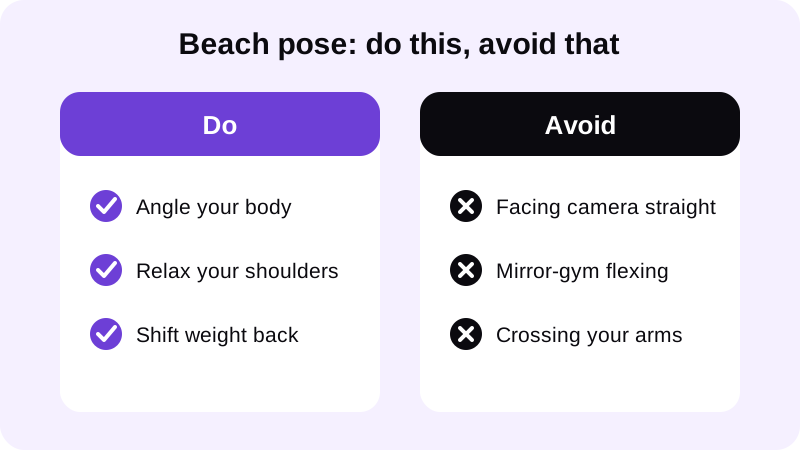
Facing the camera head-on flattens your chest and squares your stance, which reads as posed. Turning your torso and hips a quarter away from the lens shows the line of your shoulder and adds depth to the shot. The most common mistake is copying a gym-mirror pose at the beach — chest out, arms flexed, feet square to the camera. That works under flat indoor light, but outdoors it reads as try-hard.
Keep your chin level and slightly forward, let your arms hang with a small bend at the elbow instead of locking them straight, and treat the pose as a starting position rather than something to freeze into. A rock, a low wall, or stepping one foot forward gives you something to lean weight into, which naturally relaxes the rest of your body. Standing flat-footed with both feet square is what makes most beach photos look stiff in the first place.
How do you pose for a beach photo step by step?
Run through this order every time you shoot and you'll avoid most of the common mistakes before they happen.
- Find the light first. Face toward it, or let it hit you from the side — overhead midday sun creates shadows that hide your face and shoulders.
- Plant your back foot at a slight angle and shift most of your weight onto it rather than standing square.
- Turn your hips and shoulders a quarter away from the camera instead of facing it directly.
- Drop your shoulders down and back, then bring your chin slightly forward and level — not tilted up or down.
- Relax your arms with a small bend at the elbow. Rest one hand on your waist or let both hang loose.
- Take several frames while shifting your weight slightly or mid-stride, then pick the one that looks least held.
If you're shooting with a tripod or self-timer instead of a photographer, give yourself a reference point — a towel, a chair, a line in the sand — so you know where to stand before the frame locks in. These same beach photo pose tips apply whether you're in trunks or a fitted rash guard.
Should you pose differently alone than with a photographer?
A photographer can call out small corrections in real time — chin down, weight shift, relax your hand — which is why photos taken by someone else usually look more natural on the first try. Solo shots need more planning because you can't see yourself adjust mid-shot.
If you're propping your phone against something, set the frame, walk into position, and take several shots rather than one. Burst mode helps more than a single tap — ten frames in the time it takes to decide on one pose gives you more to choose from without ever resetting your stance.
What camera angle and distance work best on the beach?
Camera at chest height or slightly below, shot from several steps back, flatters most men's beach photos. Shooting from above shortens your legs and widens your midsection in the frame; shooting too close distorts whatever part of you is nearest the lens.
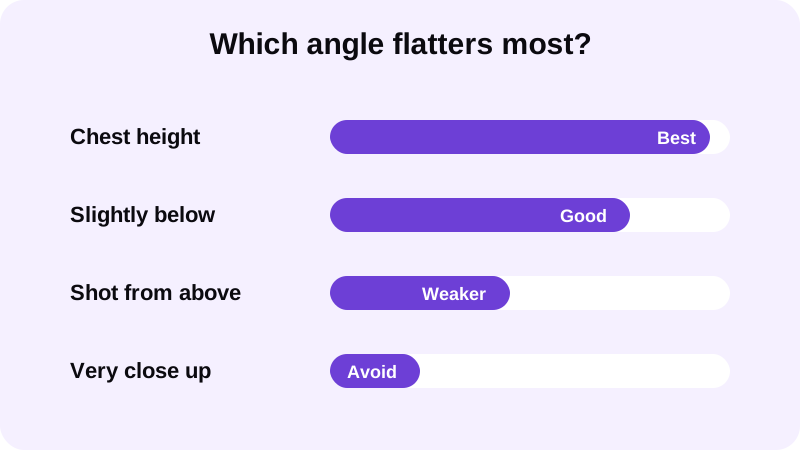
Full-body shots need enough distance that your whole frame fits without cropping at the ankles or the top of your head — see how to take a full body photo that looks sharp for the exact setup. Light matters as much as the beach photo camera angle you pick. The same stance under harsh noon sun looks flat, while low morning or evening sun adds shadow and shape to your shoulders and chest — the same side-light principle used in lighting tips written for gym photos holds outdoors too.
How do you edit a beach photo without it looking fake?
Once you've got a pose and angle you like, Chisel can sharpen what the photo already shows without changing who you are in it. It's built specifically for men's physique photos, not a general beauty filter, and every slider carries a natural limit marked in green so the result still looks like the real person in it.
- Add or sharpen six-pack and ab definition
- Build chest, arm and shoulder volume for a cleaner V-taper
- Slim the waist slightly
- Sharpen the jawline and retouch skin, teeth and beard
Beach photos usually already show your torso — shirtless or in a fitted top — so Chisel's pose detection finds it automatically with no manual masking needed. For more on dialing in a shirtless beach photo pose without it looking pasted-on, see how to add a six-pack to a photo and how to add muscle to a photo that looks real.
Every editing tool in Chisel is free to use. Pro removes ads and the watermark and unlocks Pro templates, and comes with a 3-day free trial; a one-time Lifetime purchase is also available if you'd rather skip the subscription. Exports are saved in HD, and the app writes an AI-altered label into the edited photo's metadata so the edit stays disclosed.
Where else can you learn to shoot and edit a beach photo?
- How to take a good shirtless photo
- How to make your body look leaner in photos
- Chisel AI: what it is and how it works
FAQ
What's the biggest mistake men make posing for beach photos?
Copying a gym-mirror pose outdoors — chest out, arms flexed, feet square to the camera. It works under flat indoor light but reads as try-hard on sand. Turning a quarter away from the lens and relaxing the shoulders looks far more natural in daylight.
Should I flex for a beach photo?
A held, maximum flex usually looks stiffer than a relaxed stance with a slight weight shift and a small bend in the elbows. Letting the pose feel like a starting position rather than something frozen reads as more confident and natural in most beach shots.
Can I pose well without a photographer?
Yes, with more planning. Set your frame against a fixed reference point like a towel or a line in the sand, walk into position, and shoot in burst mode so you get several frames to choose from instead of one single, overly held pose.